
Buying property in São Miguel do Gostoso: the complete guide for foreigners
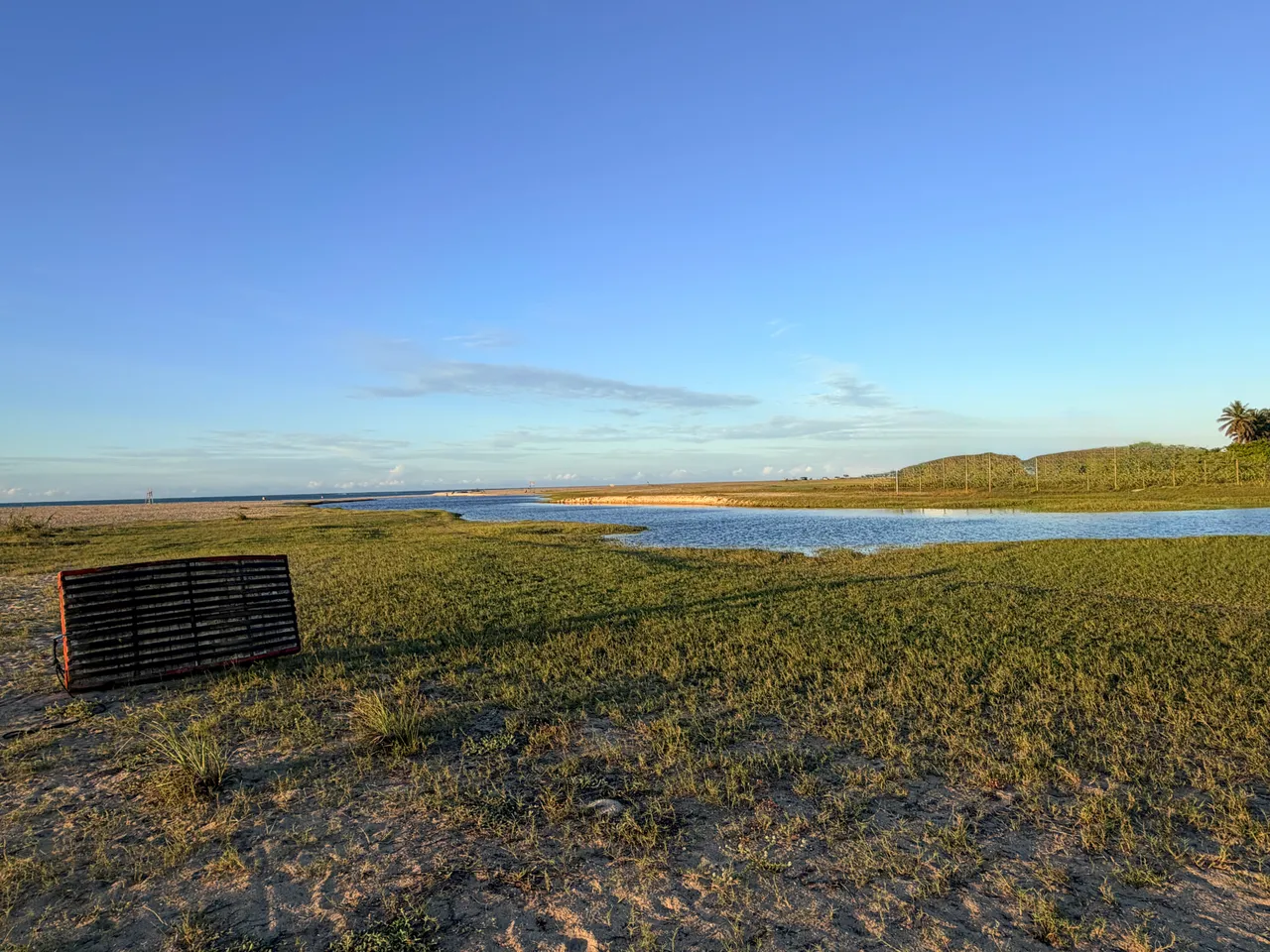
By André Barros, licensed broker (CRECI-RN 6631) · Updated November 2, 2026Photo: André BarrosWhere is São Miguel do Gostoso, and why do foreigners buy there?
São Miguel do Gostoso is a small fishing and kitesurf town on the north coast of Rio Grande do Norte, about 100 to 115 km (62 to 71 miles) from Natal International Airport. The drive takes roughly 1.5 to 2 hours. Do not confuse it with São Miguel dos Milagres, a different beach town in Alagoas.
Most visitors come for the wind. From September to February it blows on 90% to 100% of days, at 20 to 25 knots, according to IKSURFMAG. The town still has sand streets and fishing boats on the beach, with restaurants on Rua da Xepa and gated communities a short walk from the sea.
Natal airport is getting busier. It handled 100,491 international passengers in the first half of 2026, up 92% on a year earlier, according to Panrotas. TAP flies to Lisbon, direct flights to Buenos Aires already operate, and LATAM is adding a seasonal route from Dec 15, 2026 to Feb 28, 2027.
Can a foreigner buy property in Brazil?
Yes. Foreigners, including non-residents, can buy urban property in Brazil on the same terms as Brazilians, according to Oliveira Lawyers. You do not need a visa to buy. You need a CPF, a valid passport and documents that show where the money comes from.
Rural land is different. Under Law 5,709/1971, a foreigner who wants rural land above a certain size needs approval from INCRA, the federal land agency, and there are caps per municipality. Most homes and lots in gated communities in Gostoso are urban, but your lawyer should confirm how each plot is classified.
Some guides say foreigners cannot buy land within 100 meters of the coast. The actual rule is narrower. Under Decree-Law 9,760/1946 (art. 205), federal property in the 100 meter strip along the coast, such as terreno de marinha, can only be transferred to a foreigner with authorization from the President, a power that can be delegated down to the federal property office (SPU). No authorization is needed for a unit in an urban condominium, as long as foreign owners together hold no more than one third of the total area, or, for individuals only, for a plot of up to 1,000 m². Your lawyer should check whether the plot is federal land.
What is a CPF, and how do you get one?
The CPF is the Brazilian taxpayer number. You need it to sign the deed, pay taxes, open utility accounts and send money. Without it, nothing moves.
If you live abroad, you request it in person at a Brazilian consulate, booking the appointment through the e-Consular system. The service is free. Bring the FCPF form, your passport and a birth or marriage certificate, according to the Brazilian government page. The government does not give a processing time, so start early.
Escritura, matrícula and contract: what is the difference?
The matrícula is the property's record at the local Real Estate Registry (Cartório de Registro de Imóveis). It shows who owns the property and whether there is a mortgage, a lien or a court claim against it.
The escritura is the public deed of sale, signed at a notary office (tabelionato). The sale is only complete when that deed is recorded on the matrícula. Before that, you hold a contract, not the property.
Many sales start with a private purchase agreement (compromisso de compra e venda) and a deposit. That agreement should say what happens if the paperwork fails, and your lawyer should review it before you pay anything.
How much are closing costs in Brazil?
The buyer usually pays the transfer tax, the notary and the registry. Sources put the total at roughly 5% to 8% of the price, lawyer included. The seller usually pays the broker.
| Cost | Typical range | Who usually pays | Notes |
|---|---|---|---|
| ITBI (municipal transfer tax) | about 3% of the price, up to 5% in some towns | Buyer | São Miguel do Gostoso's exact rate: [CONFERIR: ask the town's tax office] |
| Notary fee for the escritura | about 0.5% to 2% | Buyer | Set by a state fee table, not by the notary |
| Registry fee (registro na matrícula) | about 0.75% | Buyer | The step that actually makes you the owner |
| Independent lawyer | about 2% (Wise), or a fixed fee | Buyer | Agree on the fee in writing before work starts |
| Laudêmio (federal coastal land only) | 5% of the land value | Set in the contract [CONFERIR: usual practice in RN] | Only if the plot is terreno de marinha |
| Broker commission | agreed per sale | Usually the seller | Confirm in the purchase agreement |
Ranges from Global Citizen Solutions (Oct 2026) and Wise (2023), which put total buyer costs at roughly 5% to 8%. Fees change: your lawyer should confirm the numbers for your property.
How do you send the money to Brazil?
Send the funds from your own bank account abroad to Brazil through a bank or an exchange provider authorized by the Central Bank. Keep the contracts and receipts. You will need them to declare the purchase, to show where the money came from and, one day, to calculate tax when you sell.
If you plan to apply for residency through the property, the rules ask for a statement from an authorized bank proving the money came from abroad. The Central Bank foreign direct investment register (SCE-IED) covers a non-resident stake in a Brazilian company, or another economic right whose return depends on the results of a business, and the filing is made by the company that receives the money (Resolution BCB 278/2022). Buying a home in your own name is not a stake in a company. Ask your exchange bank how it records the transfer.
Step by step: from first call to keys
This is the usual order. Who does what is in brackets.
- Get your CPF at a Brazilian consulate (you).
- Tell me what you want the house for: renting, holidays or living. I send matching homes with photos and a live video tour (broker).
- Hire an independent lawyer in Brazil (you). Your broker does not replace your lawyer.
- The lawyer pulls the updated matrícula and the seller's certificates and checks for coastal federal land (lawyer).
- Sign the purchase agreement and pay the deposit, with clear exit terms if the title fails (you and the seller).
- Send the balance from abroad through an authorized bank or exchange provider (you).
- Pay the ITBI and sign the escritura at the notary, in person or through a power of attorney (you or your attorney).
- Record the deed on the matrícula at the registry. Now the property is yours (lawyer).
How long does it take, and do you need to be in Brazil?
Wise estimates 40 to 45 days from signed agreement to closing, and Global Citizen Solutions says one to three months. Oliveira Lawyers notes there is no reliable deadline, because registries and certificates move at their own pace. Plan for two to three months and be pleasantly surprised.
You do not have to be there. A power of attorney, signed at a Brazilian consulate or at a local notary with an apostille, lets someone you trust sign the deed for you.
Properties for sale now
Beachfront land of 5,365 m² on Praia do Maceió, São Miguel do Gostoso
5,365 m² (57,748 sq ft)R$ 6,500,000Approx. US$ 1,182,000 · € 1,060,000Land of 20 hectares on highway BR-101 in Touros, RN
203,000 m² lotR$ 3,000,000Approx. US$ 545,000 · € 489,000Furnished 3-bedroom house with pool at Mantra Residence, Gostoso
356 m² (3,832 sq ft)R$ 2,750,000Approx. US$ 500,000 · € 448,000Frequently asked questions
Can a foreigner own beachfront property in Brazil?
Foreigners can own urban property on the same terms as Brazilians. Beachfront plots may be federal coastal land (terreno de marinha), which carries extra fees and, in some cases, extra approval. Your lawyer should check each plot.
Do I need a visa to buy property in Brazil?
No. You need a CPF, a valid passport and proof of where the money comes from.
How much are closing costs in Brazil?
Roughly 5% to 8% of the price for the buyer, covering transfer tax, notary, registry and lawyer. The seller usually pays the broker.
Do I need to be in Brazil to sign?
No. A power of attorney signed at a Brazilian consulate, or at a local notary with an apostille, lets someone sign for you.
Can foreigners get a mortgage in Brazil?
It is possible but uncommon. Global Citizen Solutions says banks ask for at least 20% down, and 40% to 50% from foreigners without Brazilian income. Most foreign buyers pay cash.
How long does buying a property in Brazil take?
Usually one to three months from signed agreement to recorded deed. Registries set the pace.
Is São Miguel do Gostoso the same as São Miguel dos Milagres?
No. São Miguel do Gostoso is in Rio Grande do Norte, about 100 km from Natal. São Miguel dos Milagres is in Alagoas, much further south.
I am André Barros, licensed real estate broker (CRECI-RN 6631) and exclusive broker for Top Brasil Imóveis in São Miguel do Gostoso. Message me on WhatsApp with what you want the house for, and I will send you the homes that fit, with a live video tour and the paperwork for your lawyer to check.
Message André on WhatsApp
Sources
- Oliveira Lawyers: real estate acquisition in Brazil (reviewed October 2026)
- Brazil Counsel: can foreigners buy property in Brazil?
- Gov.br: CPF registration abroad (updated Dec 15, 2025)
- Global Citizen Solutions: buying property in Brazil (Oct 19, 2026)
- Wise: buying property in Brazil (Jul 28, 2023)
- AASP: acquisition of rural property by foreigners in Brazil
- Decree-Law 9,760/1946, arts. 100 and 205: federal land in the 100 m coastal strip (Planalto)
- Gov.br: declaring foreign direct investment, SCE-IED (updated Mar 11, 2026)
- Central Bank of Brazil: Resolution BCB 278/2022, definition of foreign direct investment
- IKSURFMAG: São Miguel do Gostoso kitesurf travel guide
- Panrotas (Jul 2026): Natal airport passenger record in the first half of 2026
- Movimento Econômico (Jun 19, 2026): new direct flight Natal to Buenos Aires
- Esse Mundo É Nosso: São Miguel do Gostoso, how to get there
This guide is general information, not legal or tax advice. Before buying, have the documents reviewed by an independent Brazilian lawyer.